
Home › Parent guides › Sensory overload
What sensory overload can look like
Sensory overload happens when the body takes in more sound, light, touch, smell or movement than it can sort out in that moment. Adults feel it too: think of a crowded mall at the end of a long, hot day. Some children feel it sooner and more strongly. That includes some children on the autism spectrum, and many children who are not.
It is not a child being difficult. It is a body saying, “This is too much for me right now.” Some signs you may see:
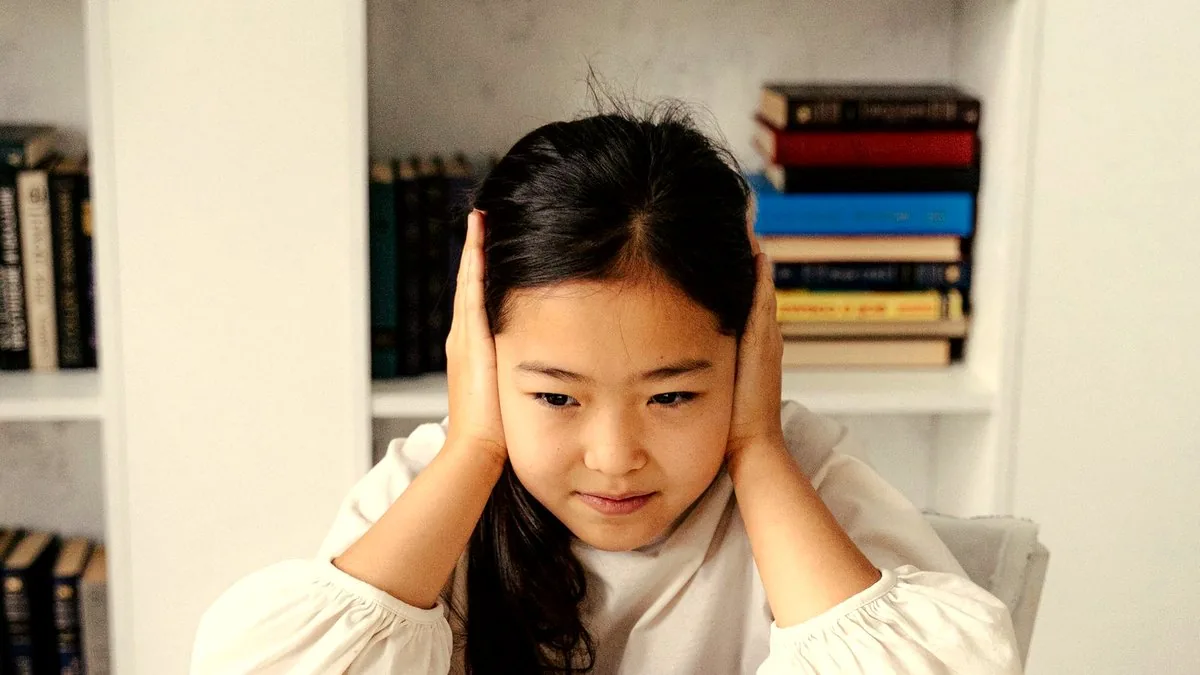
- hands over ears or eyes
- hiding, running off, or wanting to be carried
- going very quiet, or getting much louder than usual
- crying, shouting or clinging tightly to you
- clothes, food or hugs that usually feel fine suddenly feel wrong
- a busy body that cannot settle: jumping, spinning or pacing
Start with you: your calm comes first
Before any plan, notice your own body. Children borrow our calm. When a room gets loud, our shoulders rise and our breathing gets short too.
Try this first, every time: one slow breath in through the nose, a longer breath out, a sip of water, shoulders down. In our 3P.L.A.Y. approach we call this Being Available: pause, be present, stay calm. Every tip below starts here.
Noticing the early signs
Breathe first
With your shoulders soft, look for the small signals that come before the big ones: a tight jaw, chewing a sleeve, faster talking, more jumping, or eyes searching for the door. Each one is a teachable moment, for you and for your child.
Name it gently and offer a way out: “It’s loud in here. Shall we find a quiet spot together?” Early is easier for everyone.
A small plan for busy visits
Arrive early
Breath in the car
Take one slow breath before you walk in. Arriving before the crowd lets your child meet the room while it is still quiet, and greet people one or two at a time.Find a quiet corner
Sip of water
Sip some water and look around for a calm spot: a spare room, the porch, a corner away from the speakers. Ask the host kindly if your child may rest there. A small bag with a favourite book, a soft toy and a snack helps.Ear Popping and Face Tapping
Shoulders down
Drop your shoulders, then offer rather than insist. Ear Popping and Face Tapping are two calming movement activities our centre teaches and uses when a child feels overwhelmed. Ear Popping is a short Movement Based Learning (MBL) activity built on rhythm, timing and flow, which we use to help a child feel more organised. Face Tapping, from Rhythmic Movement Training (RMTi), is gentle, rhythmic fingertip tapping along set paths on the face, in a steady, predictable pattern. A cap or a hoodie pulled up can also soften sound and light. Ask our team to show you how; we’ll practise them with you at the centre or in a Parent Consulting Meeting (PCM).Keep visits short
Pause and plan
Pause at home and choose a gentle time limit, maybe 30 to 45 minutes. A short visit that goes well beats a long one that ends in tears.Agree on a break signal
Soft tone
In a soft voice, agree on a hand squeeze or a small card that means “I need a break”. When you see it, step out together.Leave while it is going well
Check in with yourself
Notice your own breath: still calm? Then this is a good moment to say goodbye. Leaving on a happy note helps your child remember the visit as safe, and makes the next one easier.
Fireworks next door
Whether you celebrate Deepavali on Sunday 8 November, visit friends or simply hear fireworks next door, the evening can be loud and bright. Start with you: a slow breath, a sip of water, shoulders down. Then:
- Tell your child before it starts: “Tonight we may hear loud bangs in the sky. They are fireworks. We are safe at home.”
- Make the room softer: close the windows and curtains, put on gentle music or a fan, and stay close.
- Offer comfort tools: a hoodie or a cosy blanket corner.
- Watch from far away, or not at all. Both are fine. Not watching yet is okay.
After the visit: time to recover
Breathe out first
A busy day can leave a child, and you, tired and wobbly for hours, sometimes into the next morning. Plan a slow evening: a warm bath, dim lights, a familiar meal and an early night. Many children settle with heavy, steady play such as carrying cushions, pushing a laundry basket, or a firm hug if they enjoy one.
Then say out loud what went well: “You stayed for the whole cake time.” Small steps count. If today was hard, the mix was not quite right yet. We learn and try again, gently.
Quick answers
Is it rude to leave an open house early?
Most hosts understand. A short, happy visit is a kind gift to everyone. You can say, “We came early so we could see you before it got busy.”
Should my child stay longer so they get used to the noise?
Short, calm, repeated visits usually help more than staying through distress. When your child feels safe first, confidence can grow one small step at a time.
Where can I learn Ear Popping and Face Tapping?
Our team teaches both calming movement activities at the centre: Ear Popping comes from Movement Based Learning (MBL), and Face Tapping comes from Rhythmic Movement Training (RMTi). Ask our team to show you how; we’ll practise them with you at the centre or in a Parent Consulting Meeting (PCM).