
Home › Parent guides › Attention span
Why attention starts with a settled body
When a child’s body is still busy, sitting down to one task is often hard. The same is true for us. If we are rushed, our voice gets quicker, and we stack one instruction on top of another. If we pause first, there is room for them to settle with us.
In our 3P.L.A.Y. approach we call this Being Available: pause, then notice, listen and acknowledge. For attention, we begin with Sense: Where am I? I am here. Settling to one thing is something we practise, one small step at a time. Not ready to sit yet is okay.
A one-minute pause for you
Try this first, every time: a sip of water, three slow breaths in through the nose with a longer breath out, and shoulders down. Then notice: Where am I? I am here. How am I feeling? And only then: What is the one thing my child needs to do right now?
You can do this in the kitchen, at the homework table or in the doorway before you call them over. The more often you practise it on easy days, the easier it is to find on busy evenings.
One instruction, one task

Begin with your own pause
Breathe first
A sip of water, three slow breaths and shoulders down, before any instruction. Your calm gives them room to settle.Get close, then get their attention
Stand or sit close by. Wait for eye contact, or a gentle touch on the shoulder, before you speak.
Give one instruction at a time, said once
One at a time
Say one short line, then wait. If you need to say it again, go close and say the same short line, calmly. A list of steps can wait.One tray, one task
Put only what is needed for this one task on the table. Put the rest away. A clear space makes one thing easier to see.
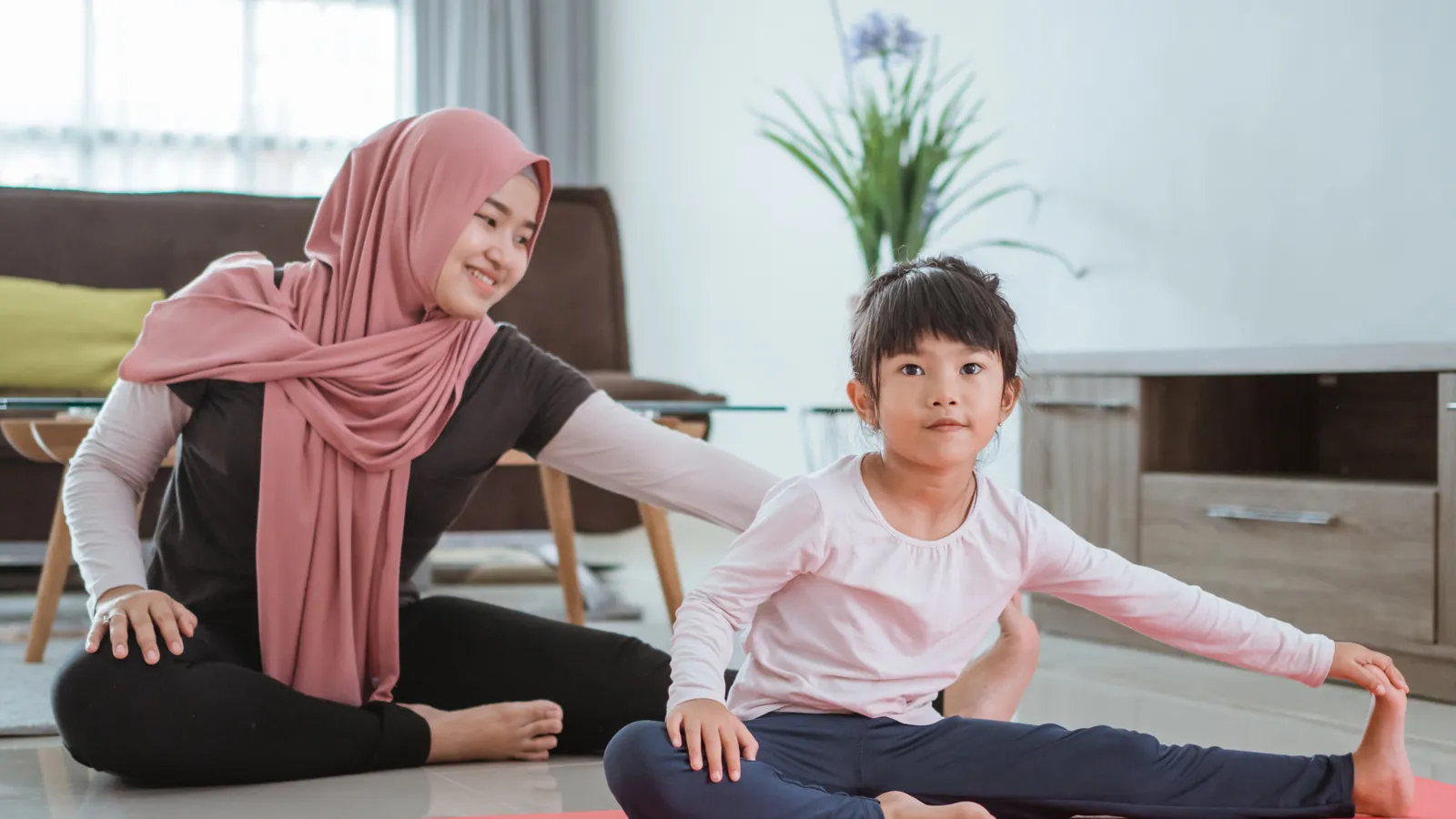
A minute of movement first
Move first
Before a sit-down task, take a minute to move: march in place, or push against a wall. Then come back to the table.
How to help without sitting there the whole time
Picture a long homework evening: the work has already taken an hour, your child is still not finished, and you are tempted to sit down and do it with them, or for them. Here is the order that helps:
- First you: one slow breath, shoulders down. You do not need to hurry the evening along.
- Then one small step: choose one short task, set out one tray, and give one instruction. Stay nearby, but do not do the work for them.
- A short burst, then a break: a few minutes of work, a short movement break, then back for the next small step.
- Words later: if it is still hard, a simple line is enough: “This is a lot. We’ll do one more small step, then we’ll stop.” Not finished yet is okay.
Looking behind the behaviour often shows that the task was too long, or that too many instructions came at once, or that the body was not settled yet. That is a teachable moment, not a reason to sit there the whole time.
When the house is full of exam stress
Pause and plan
When older brothers and sisters have exams, such as SPM written papers or end-of-year tests, the house can feel fuller and evenings can run late. Keep it light: their stress fills the house too, and a younger child may find it harder to settle to one thing.
- Keep a few anchors steady: wake time, meal times and a simple bedtime routine, even when exam days run late.
- Protect a short, quiet window: even ten minutes at a clear table, with one task, can be enough on a busy evening.
- Lower the noise: turn down the TV, and give a little room if the house feels full.
- Share the load: take turns with another adult when you can, and ask for help early.
After a hard homework moment
Breathe out first
Be kind to yourself. If you kept to one thing at a time, notice it. If the evening ran long, that is a teachable moment too. Restore connection with a hug, a smile or a simple “That was a lot. We’ll try a smaller step next time,” and try again.
Not settled to one thing yet is okay. This is something we practise, one small step at a time, together.
Quick answers
Homework takes two hours. How can I help without sitting there the whole time?
Start with your own pause. Then choose one short task, set out only what is needed, and give one instruction at a time. Stay nearby, but do not do the work for them. A few minutes of work, a short movement break, then the next small step. If it is still not finished yet, it is okay to stop and try a smaller step another time.
What if my child will not sit down at all?
They may not be ready to sit yet. Begin with your own pause, then a minute of movement together — march in place, or push against a wall. Come back to a clear table with one tray and one short task. If sitting is still hard, shorten the task again. We will support you to practise this small step.
Where can I learn more?
Ask our team at the centre, or in a Parent Consulting Meeting (PCM). We will practise these steps with you. You can also learn movement activities that can help a child’s body get ready to learn, and skills for everyday life at home, in our 3P.L.A.Y. classes or in Breakthru Academy training on empwr2u.com.
Movement activities our centre teaches
Brain Gym® is a set of 26 simple movements that can help a child’s body and brain get ready to learn. It is one of the movement activities our centre teaches. In our 3P.L.A.Y. approach we also use short movement breaks before a child sits down to work.
Try this
- Pause, and take a sip of water.
- Take three slow breaths in through the nose, with a longer breath out.
- Take a minute to move: march in place, or push against a wall. If you have learned a Brain Gym® movement for getting ready to learn, you can use it here. If you have not learned it yet, ask our team to show you at the centre or in a Parent Consulting Meeting (PCM).
- Then come back to one tray and one task.
You can learn this, and other skills for everyday life at home, in our 3P.L.A.Y. classes, or in Breakthru Academy training on empwr2u.com.